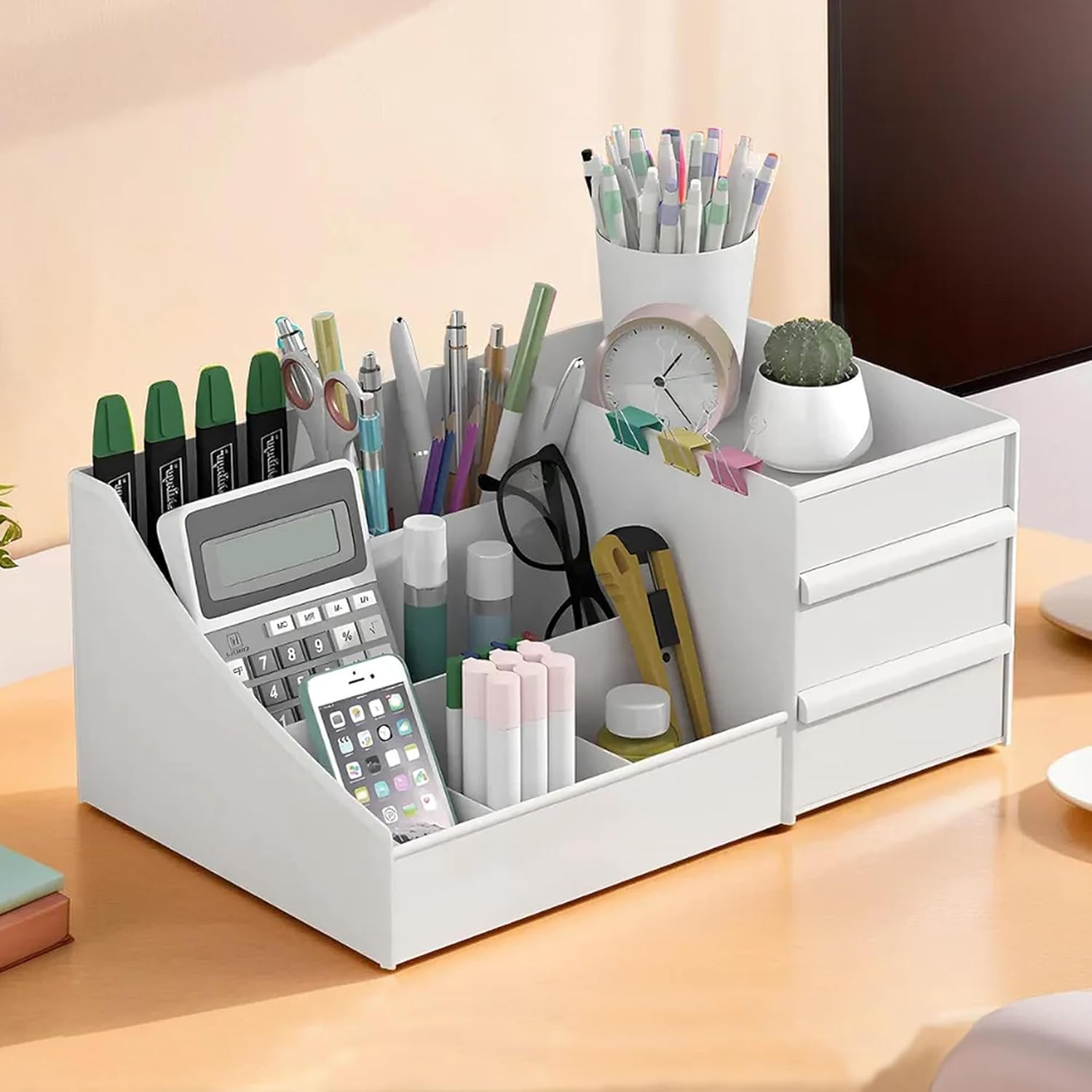
Every June, millions of Indian families face the same problem: a school circular with a list of requirements, a dozen Amazon tabs open, and no clear idea of what actually matters versus what's just nice to have. Prices spike the moment schools open, sellers inflate MRPs to make "discounts" look bigger than they are, and the cheapest option is rarely the right one. This guide cuts through all of it — what to buy for each stage of school, which brands are genuinely worth it, when prices are lowest, and how to make sure you're not paying ₹800 for something that was ₹500 three weeks ago.
The 3 Biggest Back-to-School Shopping Mistakes
Before the list, the mistakes — because avoiding these saves more money than any coupon code.
Buying too early in June. The moment schools publish their requirement lists, demand on Amazon India spikes sharply. School bags, geometry boxes, and water bottles see 20–40% price increases in the first two weeks of June. The best windows to buy are end of May (before the rush) or mid-July (after the first surge settles). Amazon Prime Day in late July consistently delivers genuine 20–40% discounts on stationery, bags, and calculators.
Buying the same supplies every year. A class 2 student needs fat triangular pencils. A class 7 student needs a mechanical pencil and a precise geometry compass. A class 11 PCM student needs the Casio FX-991EX, not the FX-82MS. Requirements change significantly every 2–3 years, and buying the same type of product without reassessing is one of the most common ways to overspend on the wrong things.
Not checking price history. Amazon India's "was ₹1,200, now ₹799" labels are frequently based on inflated original prices. A product listed at 40% off may have been at ₹799 for the last six months. Every product on this page links to its actual price history — check it before buying. Anything within 10% of its all-time low is a strong buy. Anything near its historical peak is worth waiting on.
What Every Student Needs, Regardless of Class
Some items are non-negotiable across all 12 classes. Buy these right, and the rest is optimisation.
- School bag: Ergonomic with a padded back panel and adjustable straps. The bag's weight is more important than its brand. An empty bag should never weigh more than 500g for primary students, and should have a chest or waist strap for classes 6 and above. Replace when the back panel loses its shape — a flat back panel means no spine support.
- Steel water bottle: Stainless steel, insulated, 500–750ml depending on age. Keeps water cool for 8 hours, doesn't crack or leach chemicals, and survives being dropped daily. The Cello or Milton insulated range is excellent and available consistently on Amazon India.
- Notebook set: Classmate or Navneet — buy the full year's set in one purchase. Mid-year individual notebook purchases cost 30–40% more per book. From class 6, use 200-page long books; one book per subject avoids running out mid-chapter.
- Pencil box with basic stationery: HB pencils, eraser, sharpener, blue and red pens, and a 15cm ruler. Hard case (not soft fabric) — it survives the bottom of a bag and teaches kids to keep things organised.
Primary School Essentials (Class 1 to 5)
The priority in primary school is weight, safety, and durability — not quality. Young children's spines are still developing, and an overloaded bag causes real, long-term harm. The Indian Chiropractic Association recommends the bag weight never exceed 10% of the child's body weight — for a 20kg class 2 student, that's 2kg total including books.
Use fat triangular pencils in classes 1–2 — they train correct grip from the start. Regular slim pencils are too thin for small hands and create bad habits that are difficult to correct later. Nataraj and Apsara both make triangular grip HB pencils that are inexpensive and widely available.
For art — which is a graded subject from class 3 — buy Camlin or Faber-Castell wax crayons (not the cheapest unbranded option). Cheap crayons have faint pigment that produces pale, unsatisfying results, which discourages creativity. A 16-colour Camlin wax crayon set at ₹80 is dramatically better than a ₹30 unbranded set.
Class 4 is the first year a geometry box appears. Buy the Camlin Classic set — it is reliable and inexpensive. Don't invest in Staedtler at this stage; children lose the compass first, and replacing one piece of a ₹500 set is wasteful. Upgrade when they reach class 6 and constructions become more precise.
Middle School Essentials (Class 6 to 8)
Class 6 is where organisation becomes the core skill. Eight or more subjects means eight separate notebooks, multiple pen types, and a proper geometry set. Set up a system on day one — it's much harder to retrofit organisation mid-year.
Introduce highlighters from class 6 with a strict rule: one colour per subject. Yellow for Science, green for History, pink for English, blue for Maths. This single habit, built in class 6, saves hours during class 10 board revision when reading through six months of notes at speed. Stabilo Boss is the best highlighter available in India — the ink is vivid, doesn't bleed through Classmate notebook paper, and the chisel tip works for both underlining and broad highlighting.
Buy a school atlas in class 6 and keep it through class 10. The Orient Blackswan School Atlas covers all CBSE Social Science map requirements across classes 6–10. Buy the current edition — political boundaries change and older atlases cause lost marks on map-based questions.
Upgrade to a Staedtler or Faber-Castell geometry box from class 7. The Camlin set is fine for class 4–5 exploratory geometry, but class 7 Maths requires constructions where compass precision actually matters. A compass that slips 2mm mid-arc produces a wrong answer regardless of method. The Staedtler Mars 10-piece set at ₹350–450 is the right upgrade.
High School Essentials (Class 9 and 10)
The two-year board cycle begins at class 9. Everything bought this year should be built to last until class 10 boards — don't buy cheap with the plan to replace later, because the replacement always happens at the worst possible time.
The single most important purchase in class 9 is the Casio FX-82MS scientific calculator. It is the CBSE board exam approved model, costs ₹700–900, and lasts through class 12. Some schools specify the FX-991ES instead — check before buying. Do not buy a non-Casio calculator for board exams; other brands are not approved and will be confiscated at the exam hall door.
Buy three separate lab record books — Physics, Chemistry, and Biology — from class 9. Most schools require a specific format; check with the school before purchasing. Keep them in pristine condition — lab records are submitted for internal assessment marks that count toward the final board percentage.
From class 9, shift to 200-page notebooks exclusively. Class 9 chapters are long, and running out of notebook space mid-chapter is disorganising and forces you to maintain continuity across two books. A 200-page Classmate long book per subject covers the full academic year.
Senior Secondary Essentials (Class 11 and 12)
In class 11 and 12, the stream you're in matters more than the class. PCM, PCB, and Commerce students have meaningfully different requirements.
PCM students need the Casio FX-991EX Classwiz — it handles matrices, vectors, complex numbers, definite integrals, and equation solving that the FX-82MS cannot. It is not just useful for JEE preparation; class 11 board Maths itself uses these features. The FX-991EX costs ₹1,200–1,500 and is a five-year investment: class 11, 12, JEE, and first-year engineering.
PCB students need extra lab record books and a good set of coloured pens for diagrams. Biology diagrams that are cleanly drawn and correctly labelled can mean the difference between 5 and 8 marks on a question — a significant margin at board level.
Commerce students need a ring binder from day one of class 11. The volume of supplementary material — coaching notes, printouts, CA Foundation prep sheets — becomes completely unmanageable in regular notebooks. A 4-ring A4 binder with 100 sheets of A4 refill paper handles everything.
Everyone in class 11 needs sticky notes in bulk — buy a pack of 400 minimum. Formula bookmarks in NCERT, definitions at the chapter edge, quick reminders on the desk. You will use all 400 in a single year.
The Indian Stationery Brand Guide
India has excellent domestic stationery brands. Here is what to trust, what to upgrade, and what to skip:
- Pencils: Nataraj and Apsara for everyday school use — consistent HB hardness, cheap enough to replace freely. Upgrade to Staedtler Mars for drawing and sketching from class 6.
- Geometry boxes: Camlin Classic for classes 4–6. Staedtler Mars 10-piece or Faber-Castell from class 7 onwards. The precision difference is real and measurable in Maths practical marks.
- Calculators: Casio is the only brand that matters for Indian board exams. FX-82MS for classes 8–12 (non-PCM), FX-991EX for class 11–12 PCM. No exceptions.
- Pens: Reynolds 045 and Cello Finegrip are the most reliable ball pens for extended writing. Linc Pentonic and Cello Butterflow for gel pen options from class 5.
- Highlighters: Stabilo Boss is the clear best — vivid, precise, and non-bleeding. Camlin is an acceptable budget alternative. Avoid unbranded highlighters entirely; they fade within weeks.
- Notebooks: Classmate and Navneet are equally reliable. Classmate Long Book (200-page) is the right choice from class 6 — the paper quality handles both ball pen and gel pen without ghosting.
How to Spot a Real Deal Before You Buy
Every product on this page links to its full price history on Amazon India. Before buying any item — especially expensive ones like calculators, geometry boxes, and school bags — click through and look at the 6-month or 12-month price chart. A genuine deal sits near the all-time low. A fake deal sits 5% below a price that was artificially inflated three weeks before the back-to-school season. The chart tells you which is which in seconds. If the current price is within 10% of the lowest recorded price, buy it. If it's near the top of its historical range, add it to your wishlist and check back in mid-July or during Prime Day.